
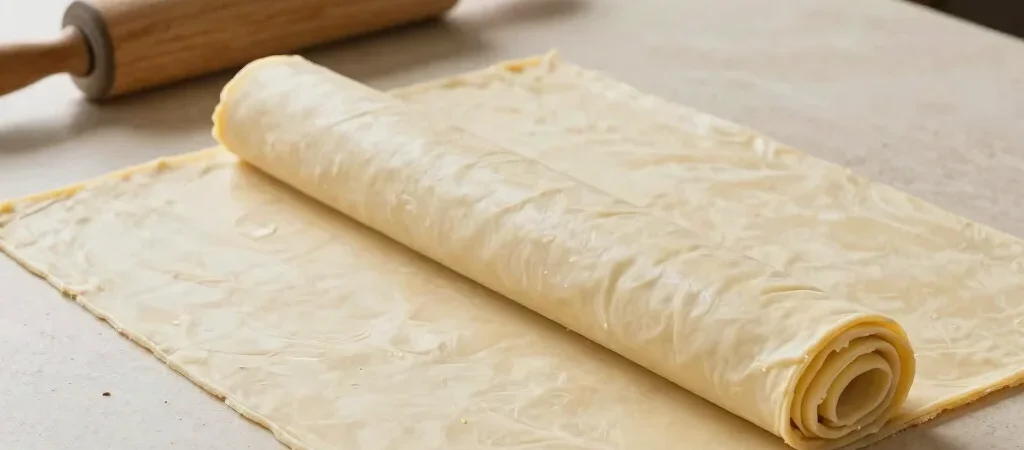
At the rolling pin, laminated dough can feel like a small negotiation: the butter should bend with the dough, not break into hard pieces or disappear into it. That balance is what lets thin layers stay distinct through each fold.
Read the Dough as You Roll
If the butter is too firm, it can fracture into shards that leave uneven gaps between layers. If it is too soft, it smears into the dough and the finished pastry loses definition. Pause when the dough begins to resist, then let it rest and cool rather than forcing another pass.
Folds Build the Structure
Each fold stacks dough and butter into a finer pattern, but more folds are not automatically better. Too much handling can warm the butter and compress the dough, trading clear flakes for a tighter crumb. Even pressure and a clean, lightly floured surface do more than speed.
Let the Oven Finish
In the oven, water in the dough and butter turns to steam and helps lift the layers apart. A well-shaped piece needs enough room to expand, and an oven that is fully heated before baking. The useful lesson is simple: flaky pastry is made as much by knowing when to stop as by knowing how to fold.